
Love: Still in Beta
What have we been taught about love?

What have we been taught about “love”? The word is a little spooky.
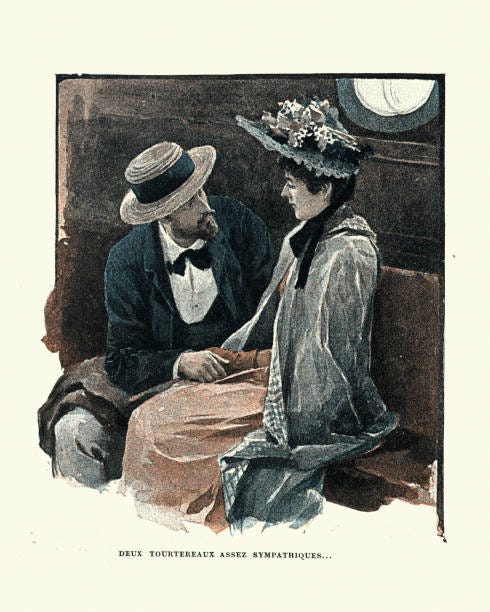
We grew up on rom-coms and then the cultural shape-shifting of gender roles.
Heteronormatively speaking, men are now expected to be tough and strong but also emotionally available.
They should be chivalrous without making women feel incapable, dominant but flexible, old school yet progressive, and financially set for when the bill or baby comes.
Women, in turn, are expected to remain youthful without appearing to try. Sexy yet maternal. Smart but approachable.
Tough but soft.
Ambitious but never more ambitious than their love of love.
Submissive, but with just enough sex appeal to be desirable without seeming like they actually like sex. (But would be good at it given the chance).
The old rules are out (and in).
Men rarely approach anymore. They don’t send drinks to tables or saunter over to interrupt conversations. They still stare, though, narrowing their eyes as if trying to sync dating profiles by thought alone.
They fear being “MeToo’ed.” (Hiss).
They fear being invasive, annoying, or rejected.
Women twirl their hair and wonder why the movies lied to them about these audacious come-ons. Or, if they grew up in an era when men were shameless, they wonder if they’ve become ugly.
I mean, I don’t want to be hit on. No. But I don’t want to not be hit on. Wha…
We’re all lost.
Each new romance begins with detective work. What role would you like me to play?
And this is just getting to a first date.
I’m out of touch, but have gleaned that the LGBTQ+ community has done fine without cookie-cutter roles and has long defined relationships person to person.
Maybe the heteros are just catching up and are rightfully confused about how to go about this whole thing.
But what about love?
Has this idea shifted with the times as well?
Marriage statistics are bleak, yet marriage still stands as the ultimate prize. The maths says few seem to be up to the task.
Millennials changed marriage. We waited. We got therapy. We learned how to learn what we want.
Being more ourselves should bring us closer to love, but I’m unsure we’ve moved the needle as much as we’d like to think.
Emily Post wrote with a seriousness about social graces and defined roles in the hopes of shaping a functioning society. We’ve rejected much of it, rightfully accounting for its social limitations. We created new systems for parenting, communication, and self-expression.
We introduced gentle parenting, insisting we not smack children on the head and say “don’t be sensitive.” Yet, we’re still unsure how to handle the inevitable exasperation that comes with loving another person.
Rumi wrote, “This is a subtle truth: Whatever you love, you are.”
To my three readers, I would add that, how you love, you are too.
LOVE.
It’s in our favorite songs and movies. Books have been written, Dateline episodes have been aired.
Enter Rumi, bell hooks, and every weeping poet.
(But did you flinch when I added Dateline into the narrative about cultural love? Murder??)
Yeah…
What have we been taught about love?
Really not much. It’s a skill and a practice. It’s a theory, the same as law and politics, and arguably, what is most missing.
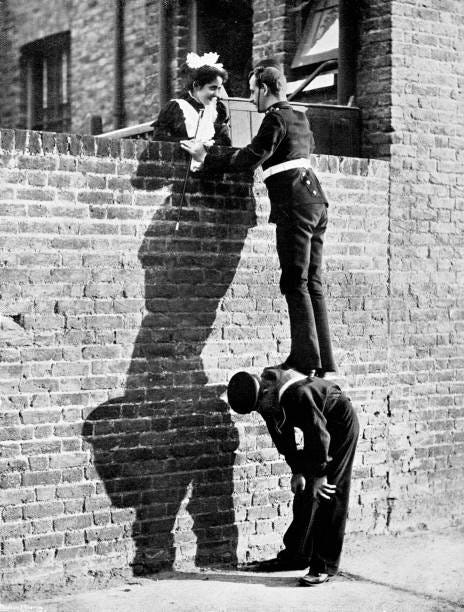
How you love is who you are. Not how good you are at Excel.
Not which sport you lettered in high school.
Not how clean (or how wiped for fingerprints) your car is.
I’m not reinventing the wheel here.
We experience love deeply in birth and death. In reality, it’s the mundane and remarkable actions taken between those two doors that count.
Even you, reading these words, is an act of love.
Mundane, remarkable.
Lovely piece Calla: Rumi wrote, “This is a subtle truth: Whatever you love, you are.” To my three readers, I would add that, how you love, you are too. Needed that little sting on this fine morning.
Always with the final words of Emily Post being little impact seeds